
"historical coffee use"
3000 article(s) found

Brief introduction of Grinding scale and Historical Information of Flavor description method for Colombian hand Coffee
A brief introduction to the grinding scale of the taste characteristics of hand-made Colombian coffee Jamie Valencia, a professor of history who is preparing for the construction of the Columbia Pavilion, said that as tourism between Colombia and China heats up, cultural exchanges between the two countries will become more frequent. He said: although Chinese people like to drink tea, it is not impossible to gradually change some of their food culture.

The Historical Origin of Xinglong Coffee is Xinglong overseas Chinese Farm 1961 Coffee good? Xinglong coffee price
Professional coffee knowledge exchange more coffee bean information please follow coffee workshop (Wechat official account cafe_style) Xnglng coffee pinyin: Xinglong coffee (Xinglong Kafei) catalogue 1 historical origin 2 Xinglong coffee reputation 3 Xinglong coffee stir-frying 4 geographical indications protection 4.1 protection range 4.2 quality and technical requirements 4.3 quality features 4.4 special logo use

What is the historical origin of Melita filter cup | brief introduction and understanding of Melita filter cup
Professional coffee knowledge exchange more coffee bean information Please pay attention to the coffee workshop (Wechat official account cafe_style) Coffee is an art of making use of various senses: the temperature of the cup, the aroma, taste, and visual enjoyment of the coffee. Visual enjoyment can be a latte, a way and equipment for making coffee by hand, or the focus of a barista. Compared to the popular espresso (

The Historical Story of Kona Coffee in Hawaii when was Hawaii Kona Coffee first planted
For more information on coffee beans, follow the Coffee Workshop (Wechat official account cafe_style) in 1813, a Spaniard first grew coffee in the ManoaValley Valley of Oahu, which is today the main campus of the University of Hawaii. In 1825, a British agronomist named John Wilkinson transplanted some coffee from Brazil.

An introduction to the historical origin of mocha coffee beans
Mocha beans are smaller and rounder than most coffee beans, which makes mocha beans look like peas. In fact, bean-shaped berry coffee beans (Peaberrybean) are sometimes called mocha beans. The shape of mocha coffee beans is similar to that of Ethiopia's Harrar coffee beans.

An introduction to the historical and cultural development of coffee in China
There is no way to examine the source of coffee. One of the many legends refers to the highlands of Cafa province in southwestern Ethiopia. It is said that a shepherd became very excited and lively when he discovered that the sheep had eaten a plant more than a thousand years ago, so he discovered coffee. It is also said that a coffee forest was destroyed by a wildfire, and the smell of barbecue coffee attracted the attention of the surrounding residents.
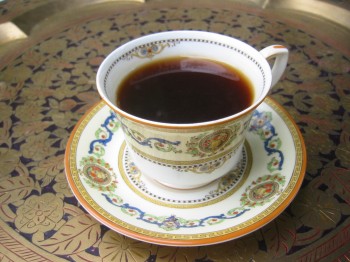
Zheng he's voyages to the West promoted the historical popularization and development of coffee in the world.
In the early days, coffee was a functional ingredient, and it was also a formula for doctors, which could not be used by ordinary people. it was not until after the 15th century that coffee was gradually turned into a civilian ingredient. Aestheticians who study the history of coffee development have noticed that the Ming Dynasty Emperor Tai Jun and the Arab countries near the sea were created by a large number of countries from 1405 to 1423. And phase

The historical origin and taste of mocha coffee
Ethiopia, known as the birthplace of coffee, has a history of coffee origin and a traditional agricultural country. It is most famous for its mocha-Mocha coffee. In the West, Mocha is not only the name of the coffee variety, but also refers to the method of brewing coffee or the utensils for brewing coffee and special conditioning methods. Mocha coffee beans are mostly dried, but there are also so-called poles.

Introduction to the requirements for the ratio of Powder to Water in the Historical Origin of Ice drop Coffee
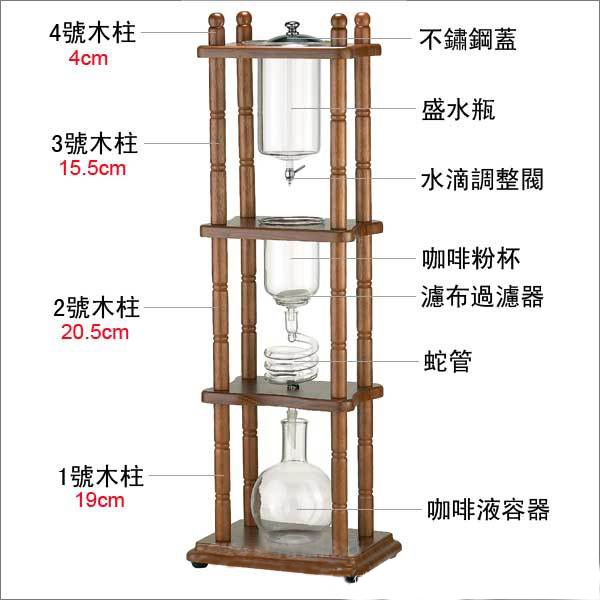
Ice drop Coffee History Origin instrument-the ratio of powder to water is required to introduce the structure and principle of the ice drop kettle, which is divided into upper pot, middle pot and lower pot. The ice in the upper pot melts into a drop of water into the middle pot containing coffee powder, and the iced coffee extracted from the lower pot is picked up. The production process is very ornamental, and it is a method of coffee extraction that best reflects the original flavor of coffee, but before the 15th century, coffee was used by Arabs for a long time.

Historical Flavor description of Coffee planting in China introduction to the characteristics of Coffee varieties produced by Taste treatment
Description of the Historical Flavor of Coffee planting in China the great potential of the coffee market in China can not be ignored. Some international coffee companies have chosen Shanghai as the production base and adopted a long-term strategy to expand the Chinese market.

What is the brand of hario? the historical development story of hario the characteristics of brewing coffee with V60
A brand that is popular around the world for its coffee brewing equipment dates back to 1921, when the company was founded as Hiromu Shibata Works. At that time, it was a heat-resistant glass maker. Today, it is still the only manufacturer in Japan with a factory. He is the famous hario. Since the establishment of the company in 1921
Peruvian Organic Coffee Historical Flavor and Taste characteristics of Peruvian Coffee grown in Peru
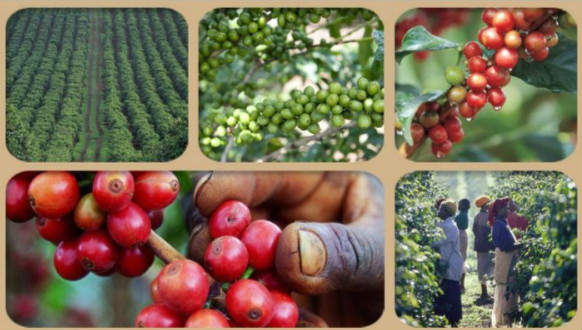
Peru: organic coffee flavor and taste characteristics: high quality and balanced, palatable acidity, can be used for mixed drinks, Peruvian coffee does not have a long history, but as a rising star, Peruvian coffee is gradually opening up its popularity and entering the international market. Peru is located in western South America, with a coastline of 2254 kilometers. The Andes runs from north to south, and the mountains account for 1% of the country's area. it belongs to the tropics.

The Origin of Mexican Coffee beans the Historical Story of Mexican Coffee
For more information on coffee beans, please follow the coffee workshop (Wechat official account cafe_style) Mexican coffee beans are said to have been transplanted to Mexico from the West Indies by a Spaniard in the late 18th century. Mexican coffee beans with excellent performance, taste comfortable, mellow, moderately acidic, mild and meticulous, pleasant aroma. Mexico has 12 major

An introduction to the Historical Origin of Jamaica Blue Mountain Coffee with a good balance of Acid, Glycol, Alcohol and bitterness
In 1950, the Government of Jamaica established the Jamaica Coffee Industry Committee (the Jamaica Coffee Industry Board), which sets quality standards for Jamaican coffee and oversees the implementation of quality standards to ensure the quality of Jamaican coffee. The committee awarded a special official seal to raw coffee and roasted coffee exported from Jamaica, which is the highest level of national coffee in the world.

A Historical introduction to Jamaica Blue Mountain Coffee Why Blue Mountain Coffee is so expensive
In 1717, King Louis XV of France ordered the cultivation of coffee in Jamaica. In the middle of the 20th century, the Governor of Jamaica, Sir Nicholas Nicholas Lawes, imported Arabica seeds from Martinique and began to plant them in St. Andrew. To this day, St. Andrew
The use of coffee drip filter pot in Dutch ice drip pot the historical origin of ice drop coffee
Ice droplets were invented in the Netherlands, and the common iced coffee drip filter consists of 3-4 layers of glass containers mounted on wooden seats. It is recommended to choose deep-roasted coffee beans to make ice-drop coffee. Slow drip filtration of seven drops in 10 seconds is recommended for about eight to ten hours. This long-time low-temperature extraction method makes the coffee powder 100% wet and effectively removes bitterness and tannins. The coffee is clear amber and full-bodied and smooth.

Historical Chronicle of the basic knowledge of Fine Coffee Culture-3
In 1933, the first automatic coffee extractor was improved; in 1935, a dwarf variant of Bourbon was discovered in Sao Paulo, Brazil, named Kaddura; in 1938, Nestl é developed a modern spray drying method in Brazil; in 1938, the Italian Achille Gaggia invented the pressure rod espresso machine; in 1941, German chemist Schulombom launched the filter cup and bottom.

Historical story of coffee sacks what is jute and its advantages why raw coffee beans are packed in jute bags
One of the unsung heroes of the global coffee trade is the humble jute bag. Cheap, sturdy and environmentally friendly, jute bags allow intercontinental transportation of raw coffee, roasting from origin to every step in the process. But how did jute become synonymous with raw coffee? In order to find the answer, we are studying the history of this kind of textile with a history of hundreds of years in order to understand its development process and the world.
Introduction to the Historical Development of Rwanda Coffee in Rwanda
Follow the caf é (Wechat official account vdailycom) found that the beautiful cafe opened a small shop of its own Rwanda Rwanda country full name: population of the Republic of Rwanda: about 9.74 million people Capital: Kigali language: Rwandan coffee annual output: 18000 tons through colonial trade policy, farmers around the country are required to plant 70 coffee trees, so created Lu

The historical origin of hanging-ear coffee the difference between instant coffee and hanging-ear coffee
Hanging ear bag is a patented design developed by the Japanese. The filter bag is used to store coffee, while there are small cardboard on both sides, like two small ears, so it is called hanging ear coffee ~ and these two small ears are used to hang the coffee bag at the mouth of the cup to brew. After brewing, the ear bag can be thrown away, and it is convenient to drink freshly ground coffee like hand-brewed coffee. The history of hanging-ear coffee